2025 - Indigenous Voices
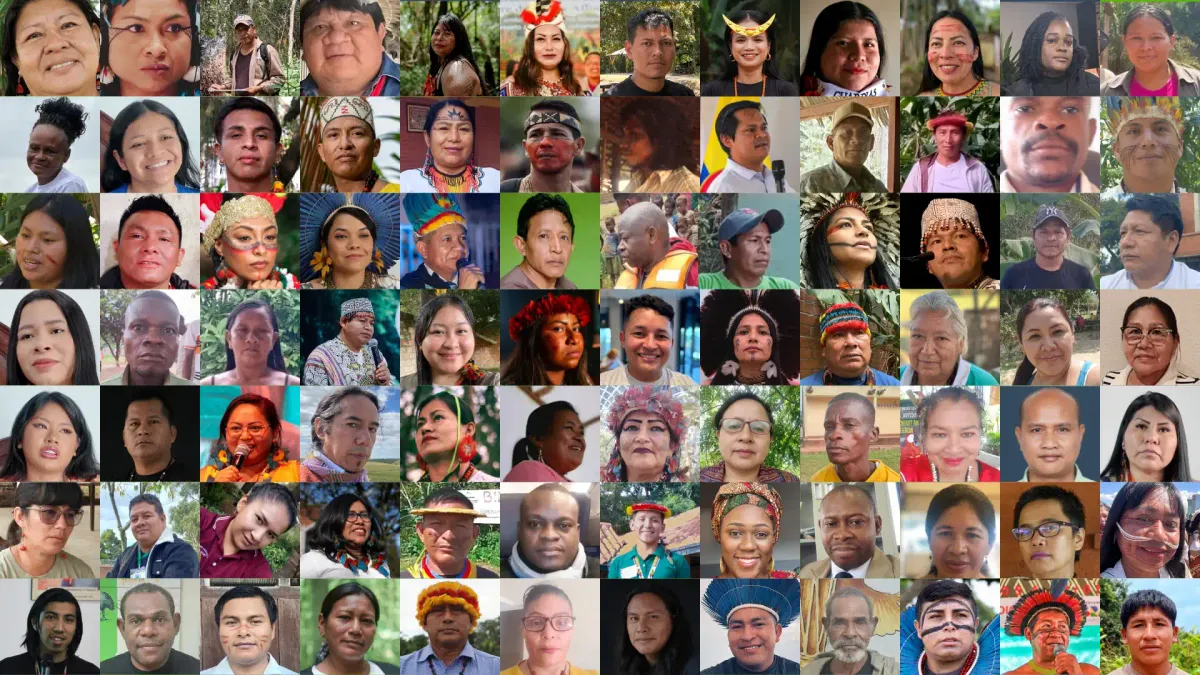
Ahead of the UN's 30th Climate Change Conference, the team of journalists from The Bureau of Investigative Journalism, led by Grace Murray, in a first-of-its kind journalism project, interviewed 100 Indigenous people from countries with the largest tropical forests to assess their quality of life and the dangers they face as frontline climate defenders. They spoke mostly to people from Brazil, Peru, the Democratic Republic of Congo (DRC), Indonesia, Bolivia, Colombia and Venezuela. The team put the same ten questions to Indigenous people in order to assess their quality of life and the threats to their livelihoods and lands
I was given a task to try to compile the data from all the interviews into an interactive presentation so that no voice stays unheard and we try to give each one of them equal opportunity to be seen and heard.
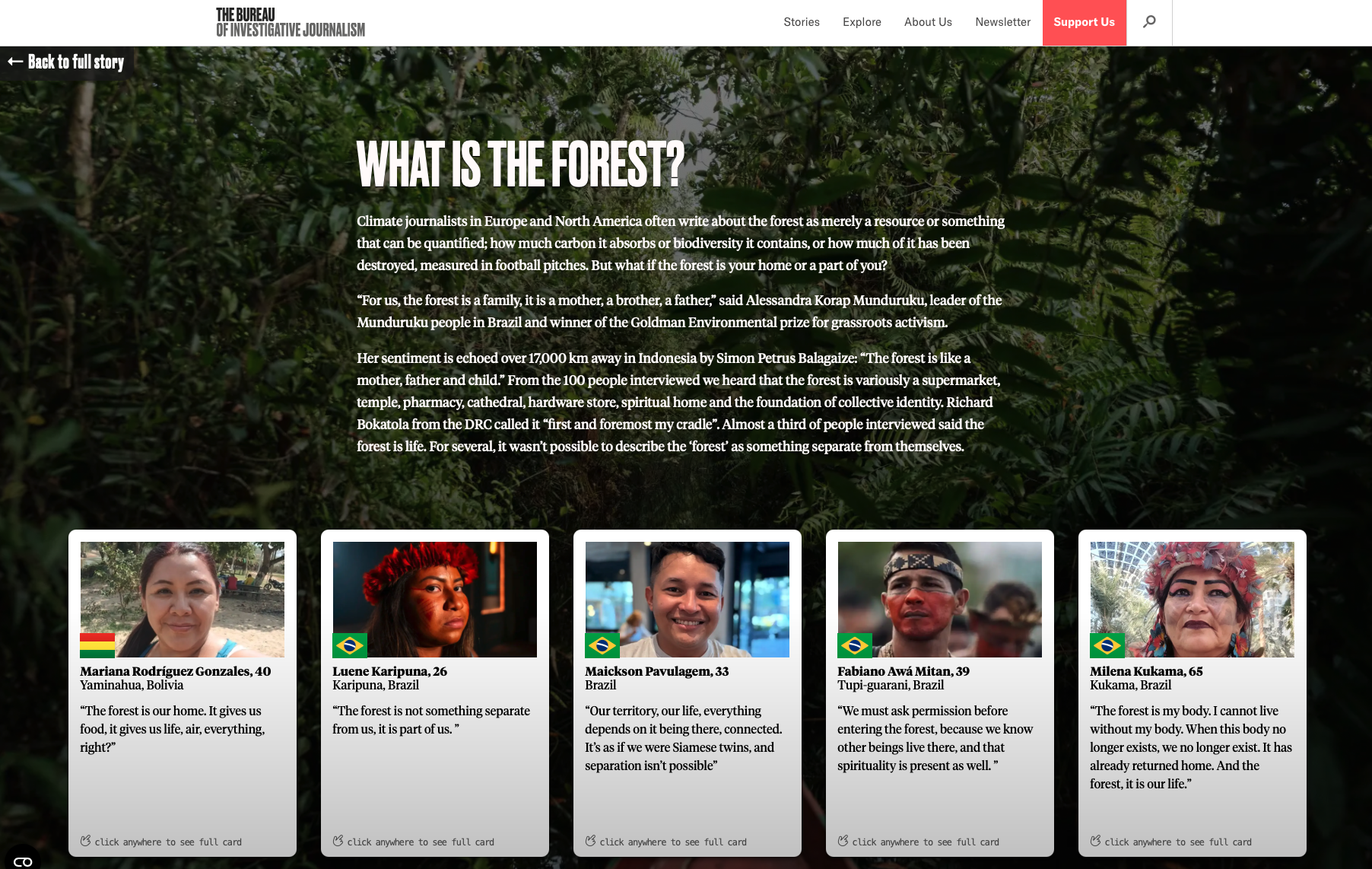
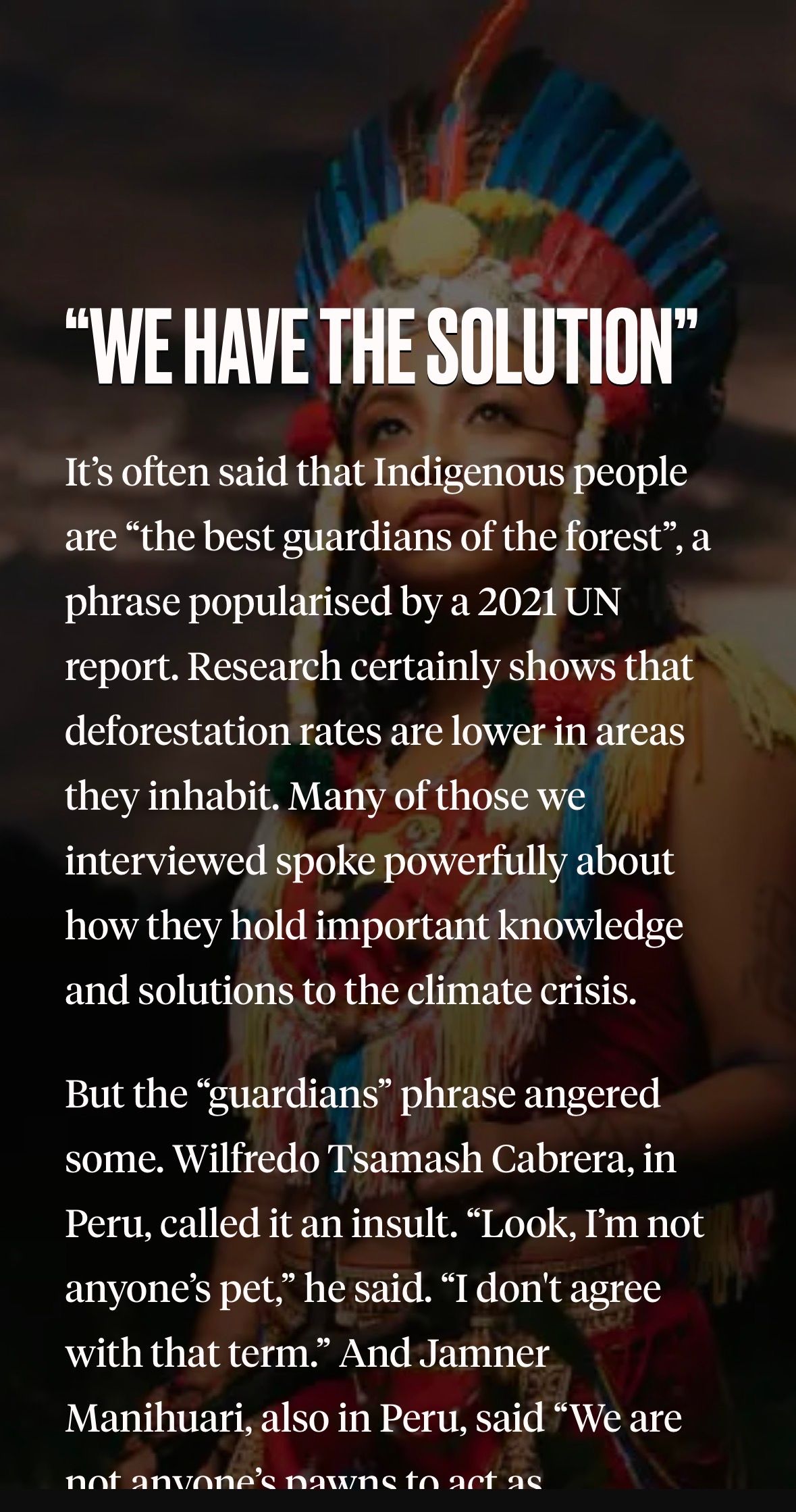
Showing 100 different testimonies all at once would have been overwhelming for any audience, so I worked with the journalists on the idea to lead the narrative across five different sections: "What is the forest" (how does the climate change affect their environment), "Basic needs" (how does it affect their ability to work, health and living standards), "Threats to life" (incidents and threats they're exposed to by conglomerates, mining companies and mercenaries), "Rights and protections" (legal status of indigenous people and their habitats), and "We have the solution" (rethinking how these problems could be solved by people who are facing them every day).
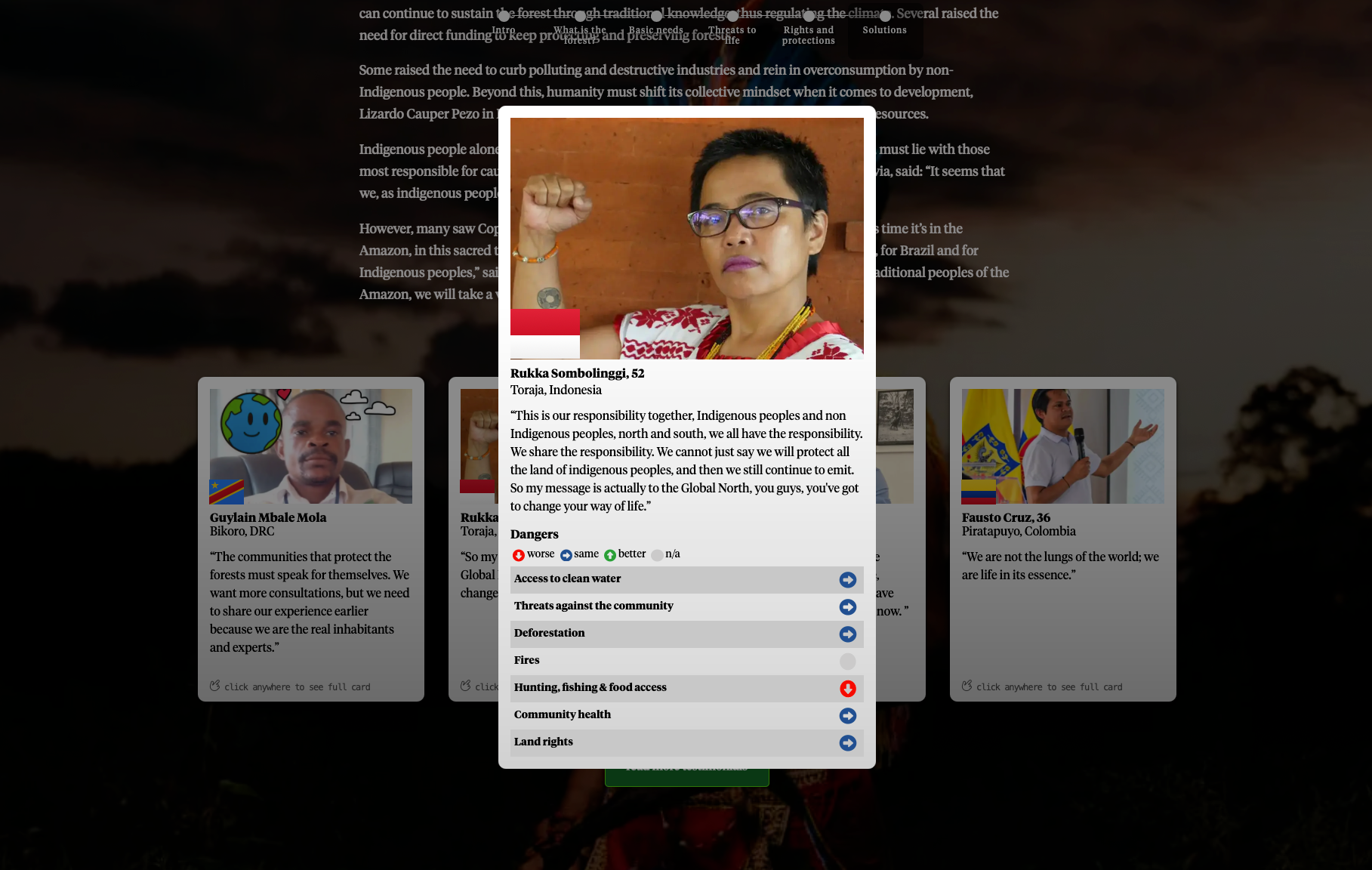
Each section would explain the situation (with changing background images, using scrollytelling techniques for layout and animation) then offer four randomly chosen cards with testimonies of indigenous people to click to find out more (and an option to show all related interviews if that's what the readers want to see).
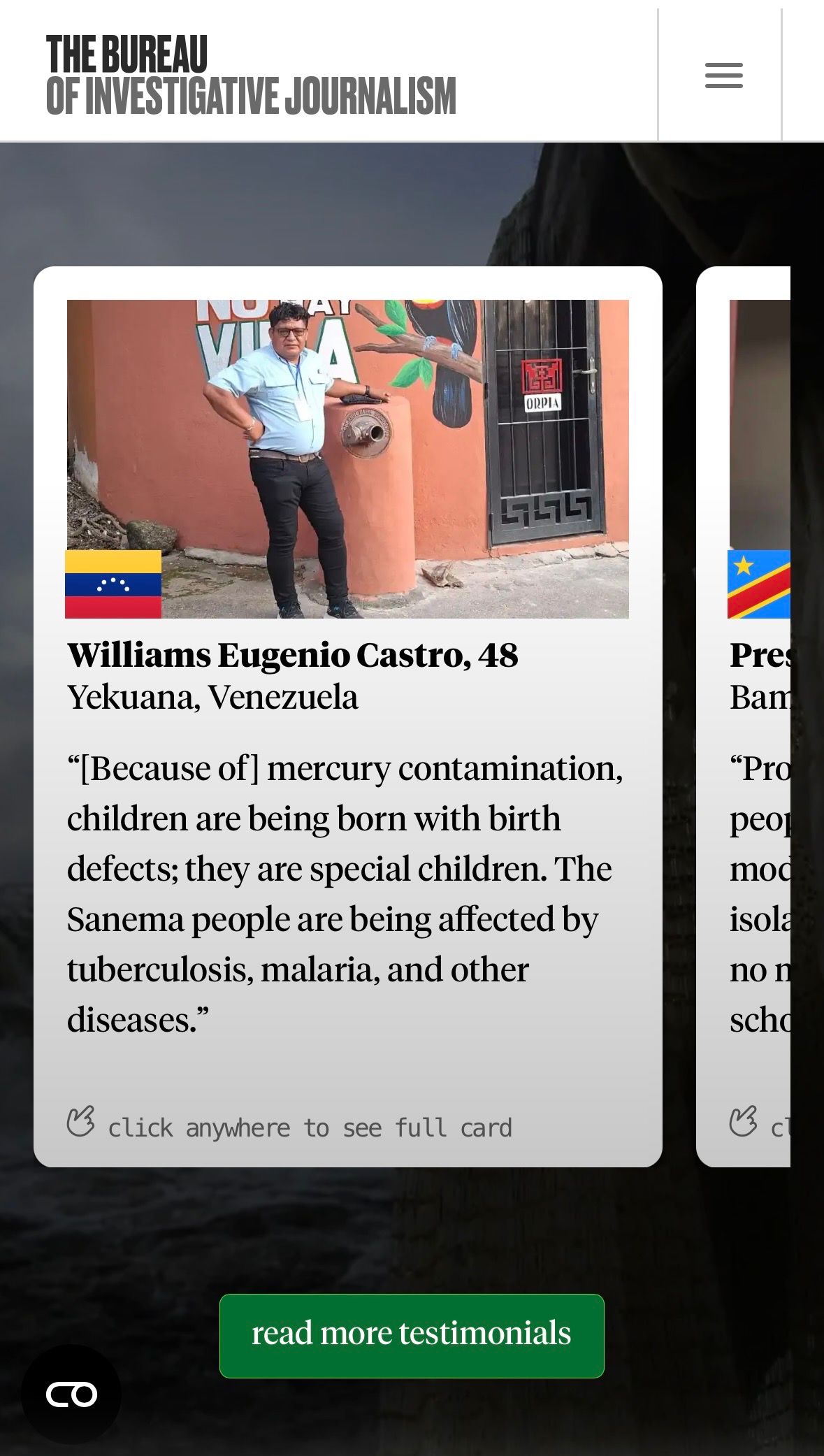
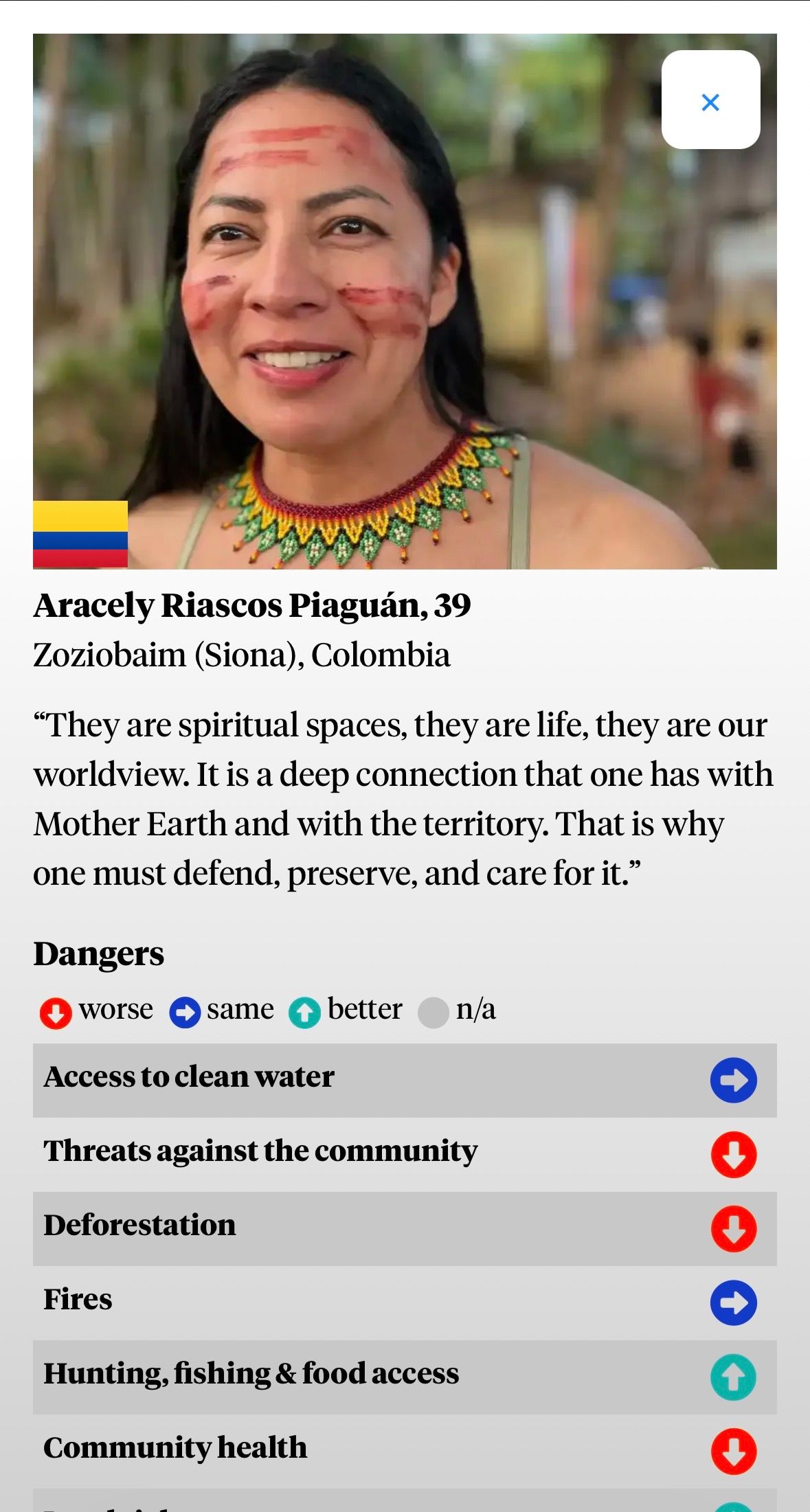
The final product was a classic website designed using HTML / SCSS and Javascript, no frameworks, fully responsive for all screens and aspect ratios. The cards themselves contained only the most important quotes from the interviews with each person, but also offered options to read full interviews on TBIJ's website for those who want to explore it in detail. I tagged the interviews internally to each of the five relevant topics (some were related to only one, but many of them to two or three of them) and wrote a script that would pick a random selection of cards related to the topic and place it under each of the topics.
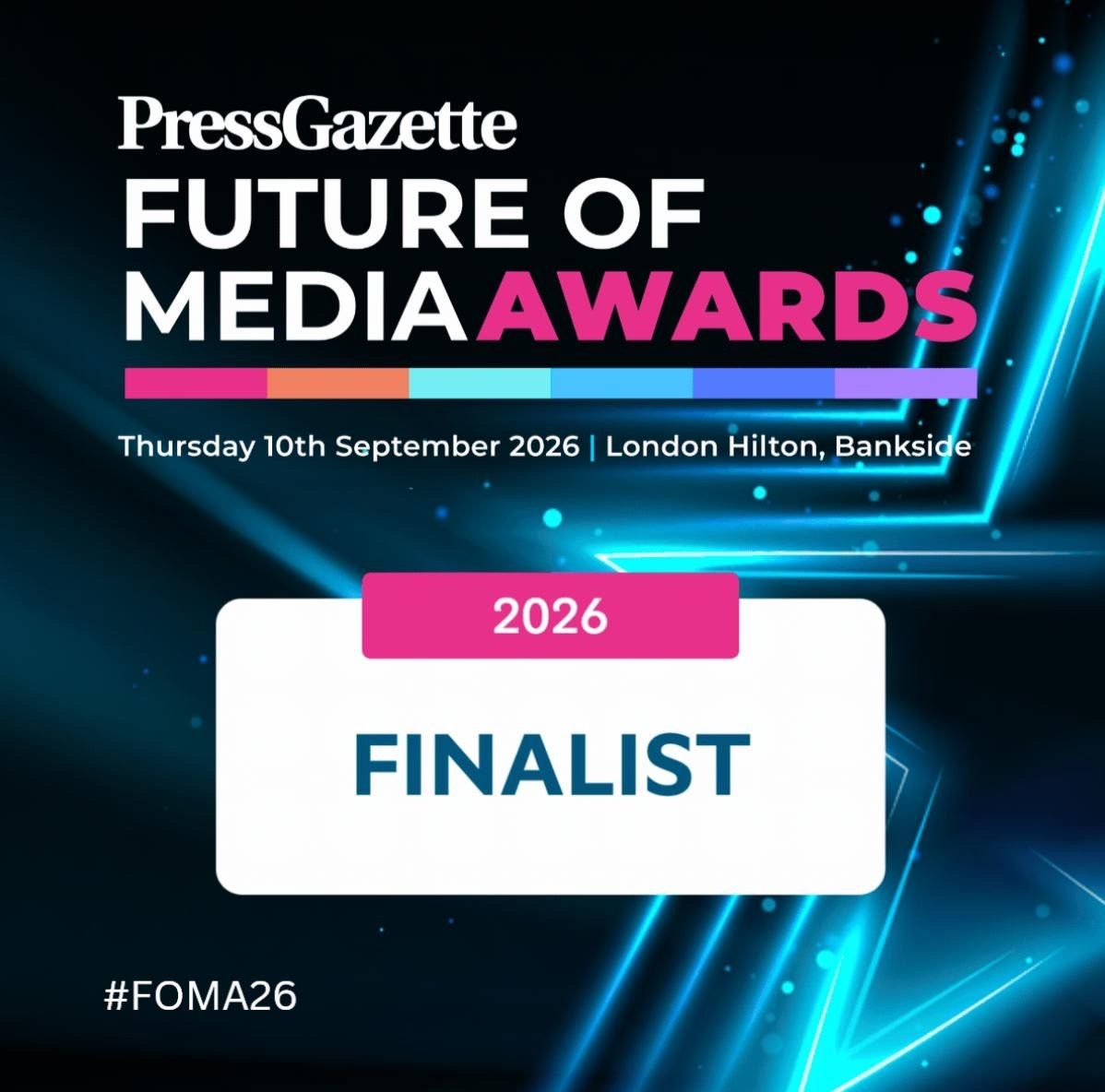
At the time of this writing, this project is nominated among the finalists for the British Future of Media Awards 2026 in the Digital Storytelling category. It can be seen here: